
Tulip Care Checklist: What to Do Each Month from Planting to Dormancy
A month-by-month guide to tulip care, from choosing and planting bulbs in autumn through spring feeding...

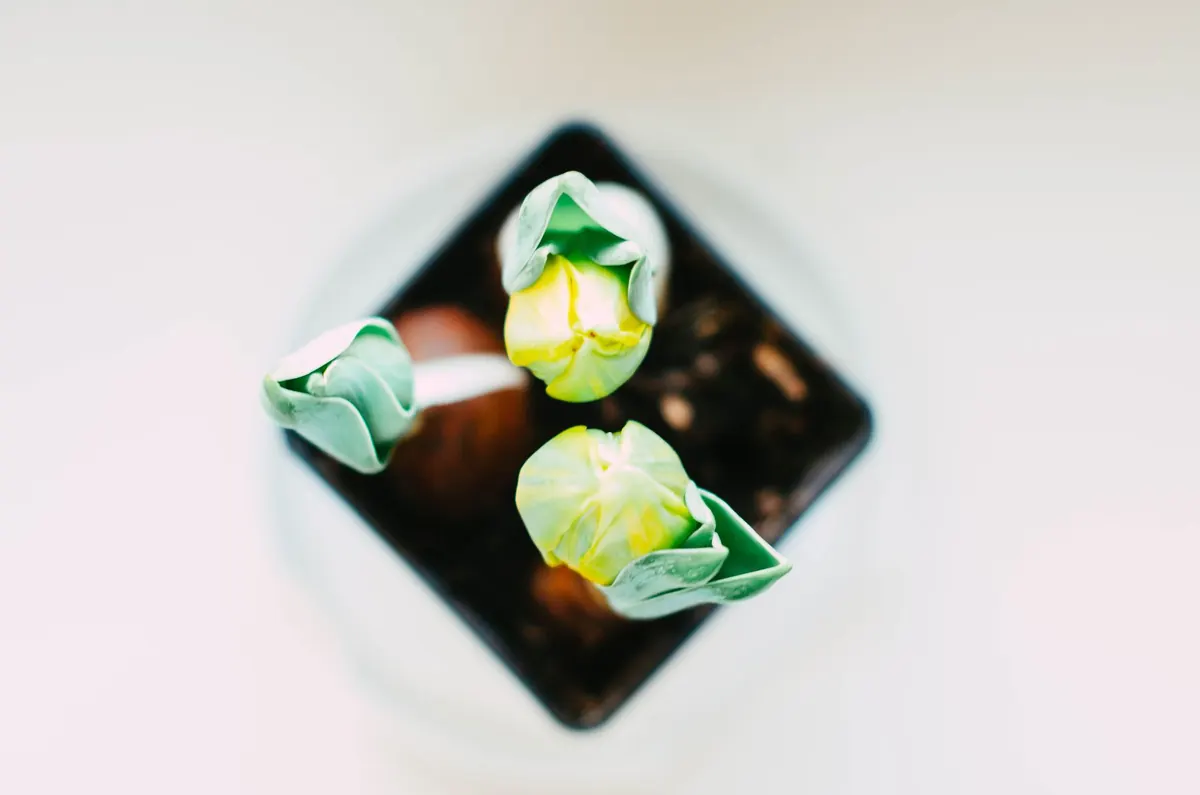
Tulips in pots earn their place. You can grow them where the soil is heavy clay, where the borders are already full, or on a balcony four floors up. You can move them into view when the first colour shows and shift them out of the way when they fade. And you can pick a colour to suit one particular corner instead of planting for the whole garden.
Get the basics right — a deep pot, free-draining compost, the correct planting depth — and a container of tulips will outperform most borders. The part that catches people out comes afterwards, because a tulip that flowers beautifully in its first spring will sulk or disappear in its second if the pot is left to the weather all summer.
Depth matters more than width. Tulip roots travel downwards, and a shallow bowl leaves bulbs sitting in wet compost with nowhere to go. Aim for at least 30cm of depth, and 35–40cm if you want tall Darwin hybrids or cottage varieties that reach 50cm or more. A pot 30cm across takes roughly a dozen to fifteen large bulbs in a single layer.
Terracotta looks good and gives stability, but dries out faster and can crack in a hard frost. Glazed or plastic pots hold moisture better and are lighter to move. Whichever you choose, make sure there are proper drainage holes — not one pinprick in the centre — and stand the pot on feet or bricks so water cannot pool underneath.
Skip the old advice about filling the bottom third with gravel. A thin layer of grit over the holes is plenty. A deep gravel sump simply raises the saturated zone closer to the bulbs, which is the opposite of what you want.
Use peat-free multipurpose compost mixed with horticultural grit, roughly three parts compost to one part grit. If your pots sit out in the rain all winter, go heavier on the grit. A loam-based compost such as John Innes No. 2 holds its structure better and adds weight, which matters for tall tulips in an exposed spot.
Bulbs carry their own food store, so they do not need rich compost to flower. What they do need is air around them. Mix in a slow-release bulb fertiliser at planting and they will have something to draw on when growth starts in spring. Avoid fresh manure or unrotted garden compost: it can damage roots and encourages fungal problems, including tulip fire.
The old rule still holds: plant three times the bulb's own height. A 4cm tulip bulb wants about 12cm of compost above its base.
In a pot, measure from the base of the bulb to the surface of the compost, and leave a good 5cm of clear space below the rim for watering. Plant shallower than 8cm and tall varieties tend to flop, while the bulbs are more exposed to frost heave and to being dug up by wildlife.
One pot can hold two or three layers. Put tall, late-flowering tulips deepest, around 20cm down. Add a middle layer of mid-season varieties at about 12cm, then finish with species tulips or muscari at 8cm. Keep at least 5cm of compost between layers so roots have somewhere to go.
Layering gives you a succession of flowers from one container, but the bulbs are competing for the same moisture and nutrients. Treat a layered pot as a single-season display and start fresh the following autumn.
After planting, keep the compost barely moist. Autumn and winter rain usually does the job, and the real risk is waterlogging rather than drought. Pots under an overhang or against a house wall may need a sparing water every couple of weeks.
Squirrels, mice and voles will happily dig up freshly planted bulbs. Cover the surface with a layer of grit, or lay wire netting over the pot and lift it off when the shoots appear. Grouping pots together also helps, and a few short canes pushed in at angles make the surface awkward to dig.
Pots freeze harder than open ground. A solid block of frozen compost can kill bulbs and crack terracotta. Stand pots against a sheltered wall, wrap them in hessian or bubble wrap, or cluster them together for mutual insulation.
Once shoots appear in March, water more freely and give a liquid tomato feed every fortnight until the flowers fade. A pot holds a limited root run, and the compost's nutrients are used up quickly.
Some tulips return reliably and some do not. Species tulips such as Tulipa tarda, T. humilis, T. clusiana and T. turkestanica are the most dependable in containers. Darwin hybrids and single late tulips often perform well again if treated properly. Elaborate doubles, parrot tulips and novelty varieties are usually best treated as annuals.
Two things decide whether you get a second spring:
In autumn, tip out the bulbs, bin any that are soft or mouldy, and replant in fresh compost. Reusing old compost is a false economy: it has lost its structure and increases the risk of disease. If you see grey-brown blotches on leaves or distorted flowers — signs of tulip fire — remove the affected bulbs and put them in the bin rather than the compost heap, and do not replant in that compost.
Choose a pot at least 30cm deep with proper drainage holes. Fill it with peat-free compost mixed with grit. Plant in November, 10–15cm deep, pointed end up, bulbs one width apart. Water once, then keep the compost on the dry side. Protect the surface from squirrels, shelter the pot from hard frost, feed in spring, deadhead, and keep the pot dry once the leaves have died down. Empty it in autumn and start again with fresh compost. Do that, and the same pot will give you a display worth waiting for, year after year.
Photo: Nika Benedictova / Pexels
A month-by-month guide to tulip care, from choosing and planting bulbs in autumn through spring feeding...
How to combine tulips and wallflowers in a UK spring border, covering colour schemes, height layers,...
Cut tulips at the right stage, condition the stems properly and keep the water shallow, and a spring bunch...